
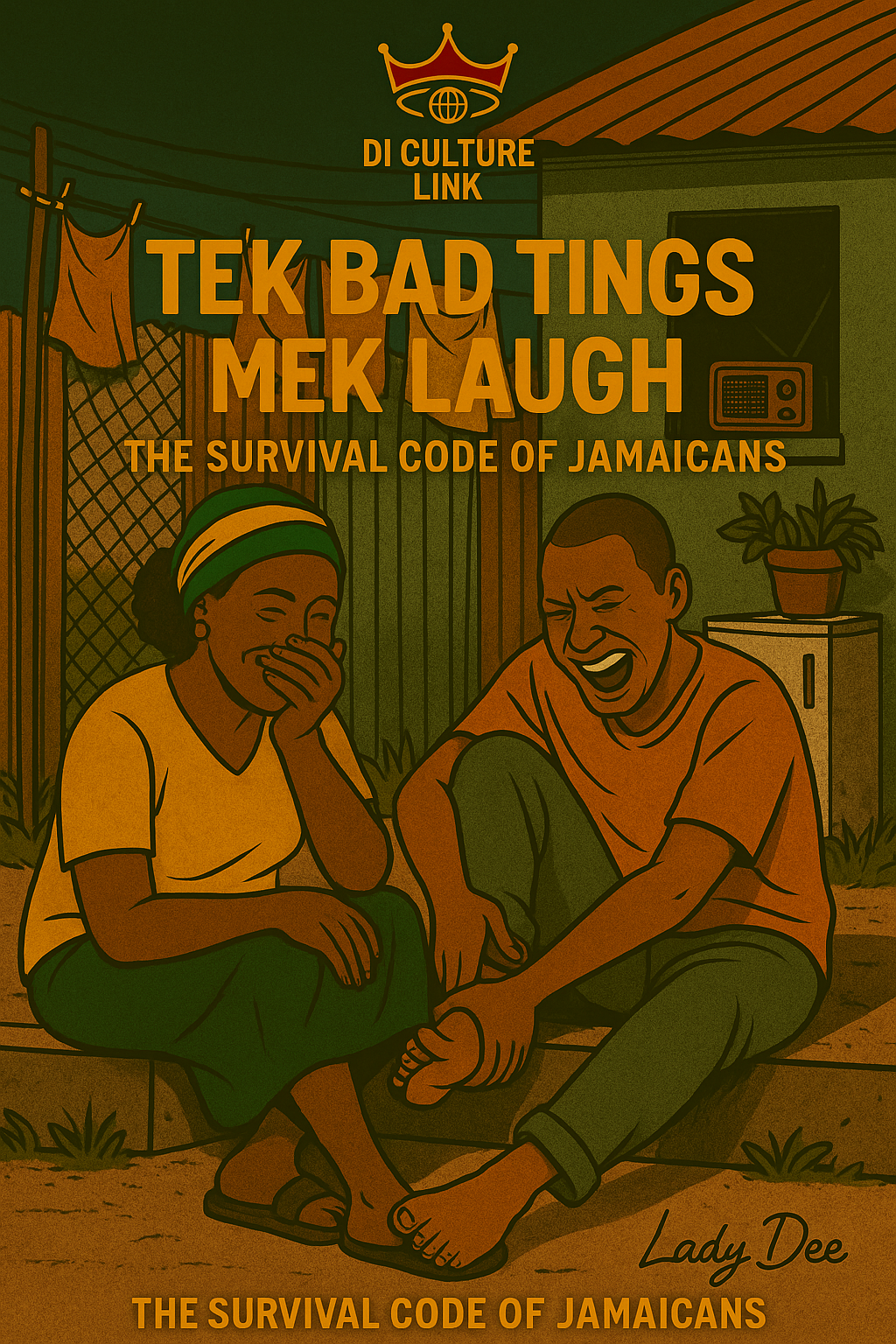
Jamaicans are known fi dem sharp wit, quick tongue, and the ability to find something funny in almost anything, even when the situation nuh funny at all. This isn’t carelessness. It’s not about being heartless. It’s cultural strategy.
“Tek bad tings mek laugh” is how Jamaicans have learned to survive hardship, disappointment, grief, and struggle. It’s a way to hold pain without letting it mash yuh up. It’s laughter as resistance. Smile as strategy. Joke as therapy.
Where It Come From: A History of Pain and Performance
This cultural response has deep roots in African oral traditions and enslaved survival culture. During slavery, laughter was often the only form of rebellion that could pass unnoticed. Under British colonial control, enslaved Africans were forced to mask pain, so they turned emotion into satire, performance, and double meaning.
The Anansi stories weren’t just entertainment. They were coded survival tales, using trickery and humour to outsmart oppression.
In post-emancipation Jamaica, Jonkonnu masqueraders used outrageous costumes and jokes to mock the very power structures that once enslaved them.
That legacy of using humour to mask and manage suffering still lives strong today.
Laughter and the Pain We Hide
“Mi a laugh but mi serious.”
That line alone captures the Jamaican emotional code.
Laughter becomes the bridge between what you can’t control and what you must carry. People joke at:
• Death – “Dem seh granny gone, but mi seh she just a rest from wi.”
• Sickness – “Mi cyaah even cough in peace again. People a look pon mi like mi a duppy.”
• Poverty – “Mi bank account have asthma—every time mi check it, it short a breath.”
• Heartbreak – “Mi cyaah even bawl loud again. Mi neighbour might tink mi have goat inna di house!”
We laugh because if we don’t, we cry.
It’s never about ignoring the pain. It’s about owning it before it own yuh.
Everyday Humour, Real Pain
In Jamaican communities, humour is shared. It’s a way to ease tension, lift spirits, and remind each other that life still deh yah.
A whole yard might laugh off misfortune together, even in the middle of chaos.
Buck yuh toe pon di edge of di bed? Yuh might hear:
“Yuh mash up di bed or di bed mash up yuh?”
Or if yuh bawl out too loud, somebody might shout:
“Ease up man! How yuh sound like goat suh?”
The laughter that follows isn’t to mock—it’s to ease the sting, shift the focus, and bring back lightness before darkness take root.
Even Nine Night gatherings spaces meant for mourning are often filled with duppy stories, cross talk, and bellyful laughter.
Because even in death, Jamaicans know:
If mi don’t laugh, mi cry.
Not Just Survival. Identity.
To “tek bad tings mek laugh” is more than a habit. It’s an identity marker. It’s how Jamaicans:
• Reclaim dignity after pain
• Build strength in the face of struggle
• Create joy where none was given
• Find language when emotion too heavy to speak
Humour becomes a form of self-preservation and a tool of cultural power.
Why Di Culture Link Is Sharing This
Because beneath every joke, there’s a story. Beneath every laugh, a memory.
And in Jamaican culture, humour is not a distraction. It’s a form of healing.
It’s how we process trauma, challenge shame, and keep spirits high even when things low.
At Di Culture Link, we honour this truth because it reminds us that survival is not just about strength.
It’s about creativity, community, and expression.
Although things hard fi a lot of people in Jamaica, you’ll still hear phrases like:
“Everything irie, man.”
“Jamaica, no problem.”
That’s not denial.
That’s resilience—in rhythm.

 Di Culture Link
In the south we say, “to laugh to keep from crying”. Laughter.. universal medicine. I love getting a deeper overstanding of the culture. It fascinates me how Southern and Jamaican culture parallel each other so much. It’s such a beautiful testimony to how resilient and intelligent our enslaved ancestors truly were. Thanks for sharing.
LikeLiked by 1 person