
In Jamaican culture, food is more than enjoyment. It’s more than celebration.
It is how we nourish the body, restore the spirit, and connect with others.
Food is shared to show love, express kindness, and honour cultural meaning from everyday meals to sacred occasions.
It is also used to cleanse, honour, and protect our wellbeing spiritually, emotionally, and energetically.
It’s how we welcome, how we give thanks, how we honour life whether at a table, a gate, or a graveside.
And because food carries so much meaning, not every plate is safe to consume.
African Ancestral Roots
This belief is rooted in African cosmology. In many West African traditions especially Yoruba and Akan food is not only used for nourishment, but for offerings, spiritual rituals, and protection work. It is understood that food can carry power, and that what enters the body can affect both spirit and mind.
That worldview survived the Middle Passage and took root in Jamaican culture. From Maroon communities to Revivalist churches, the idea remains strong: food is a spiritual transaction.
Obeah, Energy, and Protection
Whether or not you believe in obeah, most Jamaicans respect the belief that food can carry spiritual influence—good or bad. This includes:
• Tying someone through food
• Crossing someone’s luck
• Sending spiritual energy—positive or negative—into a person via what they consume
Because of this, many people are selective about who they receive food from, even if it’s offered with a smile. Trust is everything. Not just in how the food was made—but who made it, and in what spirit.
Signs and Spiritual Sensitivity
Elders often say:
“Mi belly cyaah tek everybody hand.”
Some people report feeling uneasy, sick, or suddenly drained after eating from certain people. Not because the food spoiled—but because their spirit rejected what came with it.
Whether at family events, parties, or even church gatherings, many Jamaicans will quietly pass a plate or only eat what they bring themselves. This is not disrespect. It is self-protection, guided by instinct and ancestral memory.
Modern Boundaries, Old-Time Wisdom
Today, the same caution continues—sometimes silently. Some will:
• Politely decline food at work or in public
• Only eat from family, close friends, or “known hands”
• Say they’re “not hungry” when the truth is: mi spirit nuh tek the pot
Because at the heart of this belief is one truth:
Food carries energy—and energy is transferrable, even through what you eat.
Why Di Culture Link Is Sharing This
Because this is not superstition—it’s cultural intelligence.
It reflects a Jamaican way of living that says:
Be mindful of what you consume, and who you receive it from.
It teaches awareness, spiritual sensitivity, and the value of clean hands—in both cooking and character.
At Di Culture Link, we honour this wisdom because it reminds us that culture is not only about how we celebrate—but how we protect.
And in Jamaican culture, how we eat is one of the ways we stay spiritually safe.
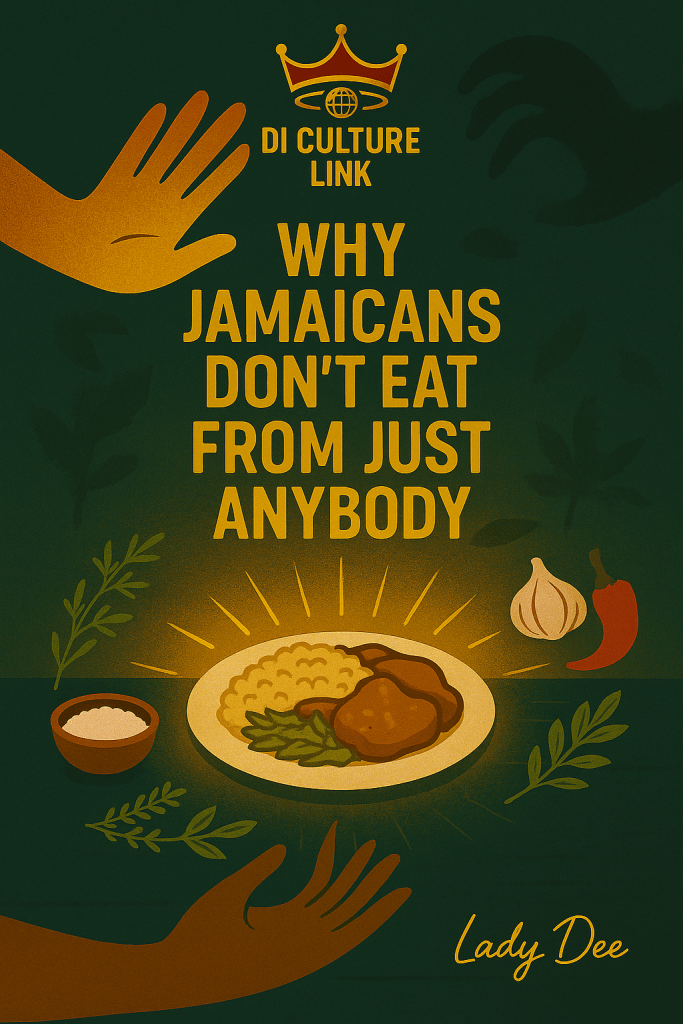
 Di Culture Link