

Written by Lady Dee
Founder and CEO, Dancehall Room
Over the past few days, some people have questioned why I have not posted or engaged with the recent clash discourse involving Jamaican dancehall artistes Masicka and Tommy Lee Sparta, as well as others connected to what has been described as a lyrical war clash. Given that my platform is called Dancehall Room and represents Jamaican culture, this question is understandable.
However, to fully understand my decision, it is important to understand what Dancehall Room represents and, more importantly, what dancehall itself truly means.
Understanding the True Meaning of Dancehall
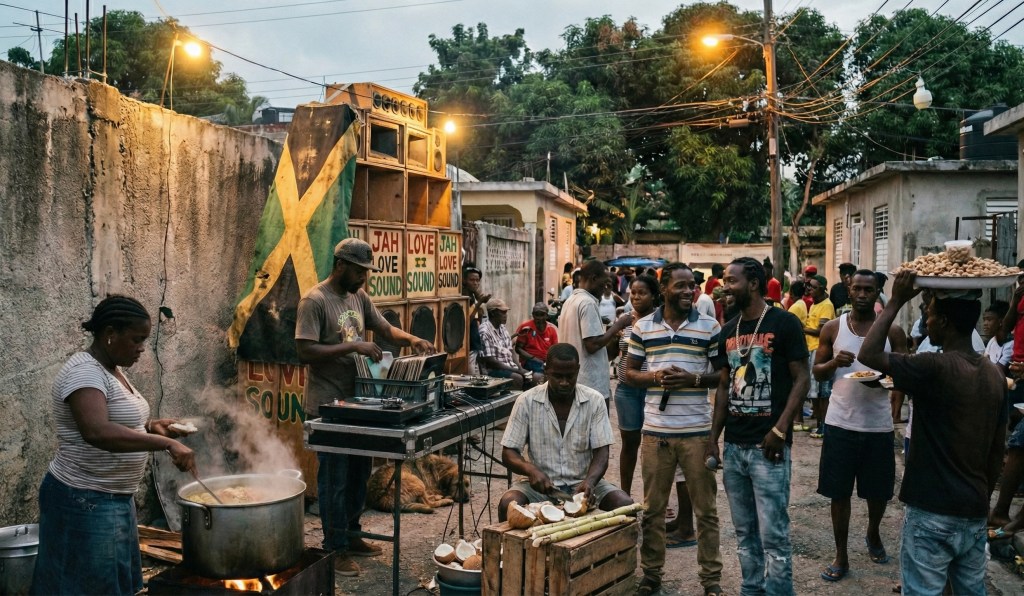
At its origin, a dancehall was exactly what the name suggests. It was a hall, yard, or open space where people gathered to dance. In Jamaica, particularly from the mid twentieth century onwards, dancehalls were physical spaces rooted in everyday community life. They existed in town halls, community centres, street corners, yards, and open fields. Wherever music could be played and people could gather, a dancehall could exist.
These spaces were never defined by one genre of music.
Selectors played what moved the crowd. Rhythm and blues, soul, ska, rocksteady, reggae, mento, calypso, and international records were all part of the dancehall experience. The defining factor was not classification, but energy. Music was selected based on how it made people feel, how it made them move, and how it connected those present in the space.
Dancehalls served many purposes. They were places of joy, release, expression, and creativity. People dressed with intention, danced with pride, socialised, competed on the dancefloor, and expressed identity through movement and style. They were also testing grounds for music. If a song worked in the dancehall, it proved its power long before charts or digital platforms existed.
As generations changed, the sound changed with them. Dancehall absorbed influences from hip hop, electronic music, Afrocentric rhythms, and global sounds, while remaining unmistakably Jamaican. That adaptability is one of its greatest strengths and a key reason its influence continues to be felt worldwide.
In this sense, dancehall is more than a genre. It is a space, a culture, and an experience.
The Philosophy Behind Dancehall Room
This understanding is central to the creation of Dancehall Room.
Dancehall Room was founded with the belief that everyone is dancing in the room. The idea extends beyond a single sound or genre. It reflects the experience of being inside a dancehall space, where different moods exist simultaneously.
From the hallway to the bedroom, every area has its own energy and its own soundtrack. Some music makes you move. Some brings joy. Some offers release, expression, comfort, or escape. All of it belongs. What matters is the feeling, the connection, and the freedom that music and entertainment provide.
Dancehall Room exists to celebrate Jamaican culture in its wider sense, including music from Jamaica and the global impact that culture continues to have worldwide. Dancehall is a core part of that story, but it does not exist in isolation.
From its inception, Dancehall Room was never created to amplify hostility or to centre narratives rooted in threats, disrespect, or harm. The intention has always been to highlight joy, creativity, innovation, and the cultural brilliance that has drawn people from across the world to Jamaican music and culture for decades.
Acknowledging Clash Culture and Dancehall History
It is also important to be honest and balanced about dancehall history. Clash culture and lyrical rivalry are not new. From Super Cat and Ninja Man, to Shabba Ranks, to Bounty Killer and Beenie Man, and to the legendary Sting clashes held each December, competitive lyrics and musical warfare have long been part of dancehall’s story.
These moments shaped eras and pushed artistes to sharpen their craft. Artistes such as Shabba Ranks understood lyrical dominance as performance, presence, and command, not simply confrontation. Rivalries like Bounty Killer and Beenie Man were intense, but they were rooted in stage performance, crowd connection, and lyrical supremacy. Importantly, their eventual reconciliation became a powerful cultural moment, showing that rivalry did not have to end in destruction and that unity could follow competition.
Dancehall history also includes clashes that were competitive yet playful, sharp yet entertaining. Clashes between Papa San and Lt Stitchie showcased wit, humour, personality, and lyrical skill. These moments were enjoyed because they balanced rivalry with creativity and showmanship.
Many clash songs from these eras have gone on to become classics. They remain part of the culture not because of shock value, but because of lyrical sharpness, delivery, timing, and audience control. True clash culture was about craft, strategy, and performance.
Historically, clash culture was structured. It lived within organised events and performance spaces, where lyrical sharpness, wit, and crowd response were central. Even when tensions existed, rivalry was largely symbolic, theatrical, and contained within the music.
When Rivalry Escalates Beyond the Stage
Dancehall history also offers important lessons about what happens when lyrical warfare moves beyond art and performance.
The rivalry between Vybz Kartel and Mavado, often framed through the Gully and Gaza divide, began as lyrical competition but escalated into real world violence, territorial division, and social tension. Communities became polarised, and the impact extended far beyond music. At its height, the situation required public calls for calm and intervention from community leaders, political figures, and cultural stakeholders, culminating in the widely publicised peace concert in 2010 that sought to ease tensions and promote unity.
This period remains one of the most sobering chapters in modern dancehall history. It demonstrates the immense influence artistes carry and the responsibility that comes with that power. It also shows the consequences when rivalry is no longer contained within lyrical performance and symbolic competition.
Later clashes involving artistes such as Aidonia, Alkaline, Popcaan, and figures associated with the 6ixx era reflected generational shifts in sound and identity. Some remained primarily musical. Others raised concerns about escalation. The difference has always been intention and containment.
Why This Moment Feels Different
What feels different now is the context, the tone, and the timing.
Much of the current discourse unfolds continuously on social media, where escalation happens in real time and language often feels less symbolic and more literal. The line between performance and real world harm feels far thinner than it once did.
Timing also matters. Jamaica is currently experiencing deep collective pain following the devastating impact of Hurricane Melissa. Communities are rebuilding. Families are displaced. The emotional weight of this moment remains fresh. In that context, amplifying rhetoric rooted in hostility did not feel appropriate to me.
This is not about denying that some people view the recent clash discourse as entertainment or that it has generated attention. That perspective exists and is acknowledged. However, I disagree with the idea that this represents dancehall being back again. Dancehall has never been dead.
What dancehall has experienced in recent years is not disappearance, but pause and transition. During the global rise of Afrobeats and Amapiano, attention shifted, while dancehall itself was evolving. Younger artistes emerged with new interpretations of the sound, blending modern production styles with traditional dancehall rhythms. This was reshaping, not retreat. Dancehall remained present, influential, and culturally relevant throughout that period.
Why I Chose Not to Cover This Moment
I believe Jamaican music and culture have the power to do much more right now. The culture has always been a tool for mobilisation, healing, and unity. Imagine if the same visibility and energy were channelled into performances, cultural events, or creative clashes designed to raise funds, support recovery efforts, and uplift communities affected by the hurricane.
Dancehall does not need destruction to prove its relevance. Jamaican culture does not need division to demonstrate its strength. Its power lies in creativity, resilience, and the ability to bring people together, especially in moments of hardship.
This is why I have chosen not to cover the recent clash discourse on my platform. It is not a rejection of dancehall or clash culture. It is a commitment to a broader, more responsible representation of Jamaican culture and the positive global impact it continues to have.
Dancehall Room will continue to celebrate the music, the history and the culture in ways that honour its roots, respect its evolution, and recognise its responsibility to the people and communities it represents.
That is not bias.
That is intention.

 Di Culture Link