
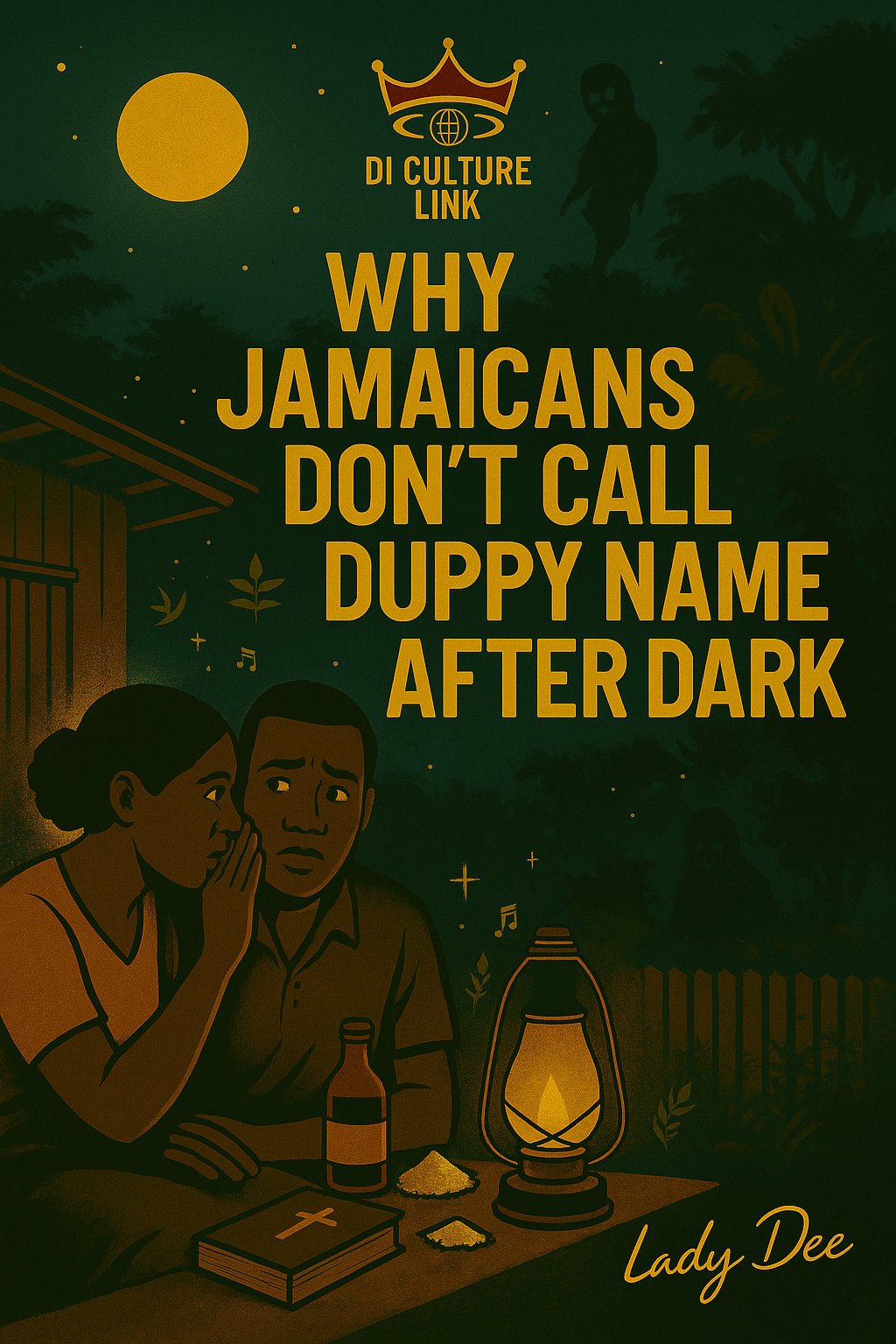
In Jamaican culture, nighttime belongs to the spirits. As the sun set and darkness spread, the rules of the world shift. Certain tings yuh just nuh do—and high on that list is this one warning passed down through generations:
Don’t call duppy name after dark.
This isn’t just old people talk. It’s a deep spiritual boundary, grounded in African ancestral systems and generations of lived experience.
Who or What Is a Duppy?
In Jamaican belief, a duppy is considered a restless spirit—the soul of someone who may have died in conflict, without closure, or whose energy has been disturbed.
According to tradition, some duppies are spirits of wrongdoers. Some are the souls of people who were buried improperly. Some are said to be sent by obeah workers as part of spiritual retaliation or manipulation.
Folklorists and elders across Jamaica often speak of figures like the rolling calf, the three-foot horse, or the white dress woman who roams near bamboo patches. These names appear again and again in rural storytelling—but always with caution, and usually not after dark.
Why Not After Dark?
It is commonly believed in Jamaican tradition that calling the name of a dead person, especially one suspected to be restless or wronged, can attract their spirit—especially at night. Even mentioning them too directly can “wake up the presence” or pull spiritual energy into the space.
Elders don’t say this to scare—they say it to protect. They believe the spirit world is most active at night, and words carry weight in the dark.
Cultural Warnings and Protective Sayings
Jamaicans often pass down spiritual caution through riddles, side talk, and common sayings. Here are a few warnings heard across the island:
• “If yuh hear yuh name call and don’t see a soul, don’t answer.” (That might not be someone living.)
• “If breeze blow and tree nah move, come inside.”
• “If yuh see dog a bark and cat a stare in one corner, watch yuh steps.”
• “Salt cut duppy. Light run dem.”
Even how duppy stories are told changes. Instead of using real names, people say “Mr. Man,” “Miss Woman,” “Dem Deh One Deh,” or simply “di spirit”—a way to speak the story without calling the force.
Humour in Fear
And still, leave it to Jamaicans fi put joke in the middle of a dread moment.
Somebody drop a fork at night:
“A who spirit dat? Di duppy hungry?”
Hear a knock or a noise pon di zinc:
“Mi hope a breeze… and not Bogle come fi rehearsal.”
(A playful reference—but only some brave ones risk calling name. Most just say “Yuh know who.”)
Somebody tell one duppy story too loud:
“Mi not even a walk home wid unuh. Mi nuh want nuh duppy follow mi go yard.”
It’s serious, but it’s shared.
We laugh, but we lock the windows same way.
African Roots of Spiritual Respect
The idea of avoiding spirit talk at night comes from deep African cosmology. In traditional belief systems across West Africa, night is a spiritual threshold. It is the time when ancestors, guides, and wandering spirits are closest to the living.
Jamaican traditions like Revival, Myal, Kumina, and Maroon rituals all reflect this knowledge. Drumming often starts after nightfall—but protections like white rum, fire, salt, and prayer are always in place.
In these belief systems, naming carries power, and careless speech can invite unintended energy. So the elders say:
“What yuh don’t trouble won’t trouble yuh.”
Why Di Culture Link Is Sharing This
Because this is more than folklore.
It is a system of spiritual caution, taught through story, practice, and memory. It teaches Jamaicans to respect the unseen, to move wisely in the dark, and to understand that not everything must be called by name.
“Don’t call duppy name after dark” is not about being backward. It’s about being aware.
It’s about understanding that in our culture, language has power.
And the spiritual realm deserves care, even when it’s the punchline of a joke.
At Di Culture Link, we share this because culture isn’t only about how we dress and celebrate – it’s also about how we protect, how we honour, and how we pass on the kind of knowledge yuh don’t learn in school… but yuh better know it.

 Di Culture Link